WEBSITE ORDER FACILITY WILL BE AVAILABLE SOON
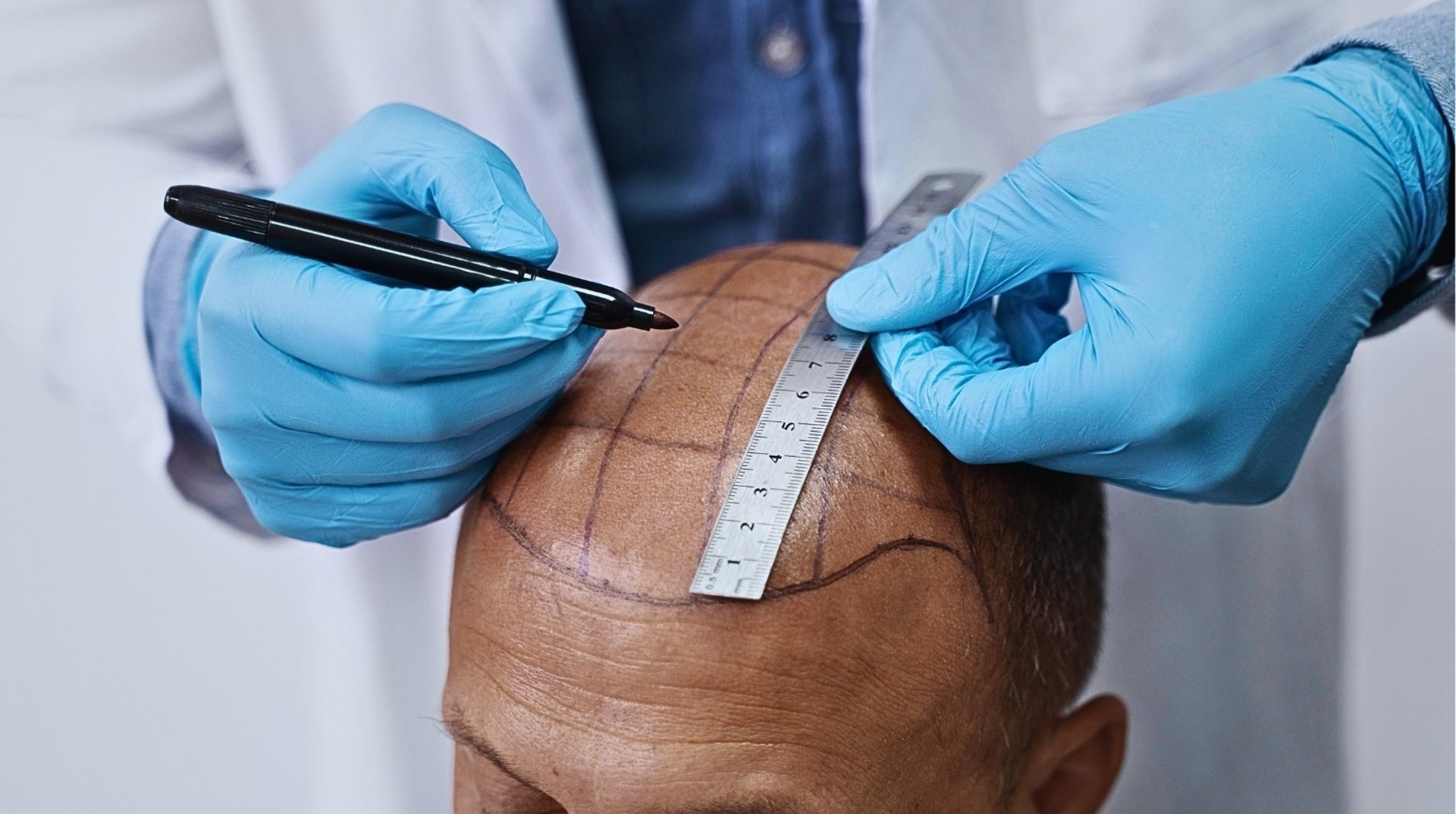
Surgical Hair Restoration
Hair Transplant Surgery
Everything you need to know about modern hair transplant procedures — techniques, candidacy, recovery, and what to realistically expect from your results.
95%
Graft survival rate
What Is a Hair Transplant?
A hair transplant is a surgical procedure that moves healthy, genetically resistant hair follicles from a "donor area" — typically the back and sides of the scalp — to areas of thinning or baldness. Because donor hair is taken from regions unaffected by androgenetic alopecia (the most common form of hair loss), the transplanted follicles continue to grow naturally and permanently in their new location.
Hair transplantation has advanced significantly over the past two decades. Modern techniques leave minimal scarring, produce highly natural-looking results, and have short recovery times compared to older strip methods. It is the only proven permanent solution for hair loss.
A Complete Guide
12–18
Full results
4,000+
Grafts in one session
Permanent
Results done correctly
Overview
Advanced techniques allow surgeons to replicate your natural hairline, angle, and direction precisely — indistinguishable from your own hair when performed by an expert.
Transplanted follicles are genetically programmed to resist DHT — the hormone responsible for pattern baldness — meaning results last a lifetime with proper care.
Permanent results
Natural appearance
Surgical Techniques
A variation of FUE using a Choi implanter pen to extract and implant follicles in one step — no channel creation required. Offers precise angle and depth control. Popular for hairline refinement and density work.
Individual follicular units are extracted one by one using a micro-punch tool (0.6–1.0mm). No linear scar. Ideal for patients who prefer to wear their hair short. The gold standard for most modern transplants.
FUE, FUT & DHI Explained
Direct Hair Implantation
The three primary techniques differ in how follicles are harvested and implanted. Your surgeon will recommend the most suitable method based on your donor density, degree of hair loss, and desired outcome.
Follicular Unit Extraction
Follicular Unit Transplantation
A strip of scalp is removed from the donor area and follicular units are dissected under microscope. Leaves a linear scar but allows more grafts in a single session. Suited for patients with significant hair loss.
Am I a Candidate?
Adults over 25 with stabilised hair loss, good donor density at the back and sides, realistic expectations about coverage and density, non-smokers in good general health, and those experiencing androgenetic alopecia (male or female pattern baldness).
Who Is Suitable for a Hair Transplant?
Not everyone experiencing hair loss is an ideal candidate. The most important factor is the availability and quality of donor hair. Without sufficient donor density, a surgeon cannot achieve natural-looking coverage. A thorough consultation with a qualified trichologist or hair restoration surgeon is essential before proceeding.
Good candidates
May not be suitable
Those with poor donor density, diffuse unpatterned alopecia (hair loss across the entire scalp including donor areas), active autoimmune conditions affecting hair, certain bleeding disorders, unrealistic expectations, or those under 25 whose hair loss pattern is still evolving.
Recovery & Results
Mild swelling, redness, and scabbing around grafts is normal. The donor area will be tender. Sleep elevated, avoid touching the transplanted area, and follow your surgeon's washing instructions carefully from day 2 or 3.
What to Expect: Month by Month
Not everyone experiencing hair loss is an ideal candidate. The most important factor is the availability and quality of donor hair. Without sufficient donor density, a surgeon cannot achieve natural-looking coverage. A thorough consultation with a qualified trichologist or hair restoration surgeon is essential before proceeding.
Immediately post-surgery ( D1–7 )
Shedding phase ( Wk 2–3 )
Most transplanted hairs fall out — this is completely normal and expected. The follicles remain dormant beneath the scalp and are not lost. Do not be alarmed; this phase is temporary.
New growth begins ( Mo 3–4 )
Fine, thin hairs start to emerge. They may appear wispy or slightly kinked at first — this is normal. Growth is often uneven at this stage and the hair will gradually coarsen and thicken over the coming months.
Noticeable improvement ( Mo 6–8 )
Significant coverage is now visible. Hair thickens, darkens, and becomes more consistent in texture. Most patients feel comfortable in social settings without covering their hair at this point.
Final results ( Mo 12–18 )
Significant coverage is now visible. Hair thickens, darkens, and becomes more consistent in texture. Most patients feel comfortable in social settings without covering their hair at this point.
FAQ
The procedure is performed under local anaesthesia, so the surgery itself is not painful. Patients may feel pressure or mild discomfort during injections. Post-procedure soreness in the donor and recipient areas is normal and managed with over-the-counter pain relief for a few days.
Frequently Asked Questions
Is a hair transplant painful?
How many grafts will I need?
The number of grafts depends on the degree of hair loss, the size of the area to be covered, and the density you want to achieve. A Norwood 2–3 hairline recession may need 1,000–2,000 grafts, while advanced loss (Norwood 5–7) may require 3,500–5,000+. Your surgeon will give a personalised estimate at consultation.
Will the results look natural?
In the hands of a skilled surgeon, results are indistinguishable from natural hair. The key is careful hairline design, correct angle and direction of implantation, and using single follicular units at the hairline for a soft, natural edge. Poor results are almost always the result of choosing an unqualified provider.
Do I need to take medication alongside the transplant?
Significant coverage is now visible. Hair thickens, darkens, and becomes more consistent in texture. Most patients feel comfortable in social settings without covering their hair at this point.
Can women have hair transplants?
Yes, though female hair loss patterns differ from male. Women with female pattern hair loss, traction alopecia, or hairline recession can be excellent candidates. However, diffuse thinning across the entire scalp — including donor areas — makes some women unsuitable. A specialist consultation is essential.
Choose a surgeon who is a registered medical professional with specialist training in hair restoration, holds membership in recognised bodies (e.g. ISHRS — International Society of Hair Restoration Surgery), has a substantial before-and-after portfolio, and operates in a licensed clinical environment. Avoid hair "technician"-only clinics where no qualified doctor oversees the procedure.
What should I look for in a surgeon?
Is it worth going abroad for a cheaper transplant?
Medical tourism (particularly Turkey) has made transplants far more affordable, and many reputable clinics operate abroad. However, the risks of unqualified providers, poor aftercare, and difficulty managing complications from home are real. If considering treatment abroad, apply the same due diligence — verify credentials, read reviews carefully, and ensure follow-up support is in place.